1. WHAT A BETTING SLIP ACTUALLY IS
A betting slip is the summary screen a sportsbook shows after you select one or more bets and before you confirm them. It brings the entire wager into one place: what you are betting on, the current odds, how much you are staking, and what the bet could return.
The term comes from the paper tickets used at retail sportsbooks. Mobile apps and websites use the same idea digitally, even though the layout may look very different from one operator to another.
Learning to read the slip quickly and accurately is one of the most practical beginner skills in sports betting. A misread slip can mean the wrong side, the wrong stake, or a changed price. The goal of this guide is to make every field easy to identify before you tap the final confirm button.
The 10-second pre-bet check
- Is the selection exactly what I intended?
- Did the odds change after I added the bet?
- Is the stake amount correct?
- Am I using cash or a bonus balance?
- Do I understand the potential profit and total return?
2. THE ANATOMY OF A SINGLE STRAIGHT BET SLIP
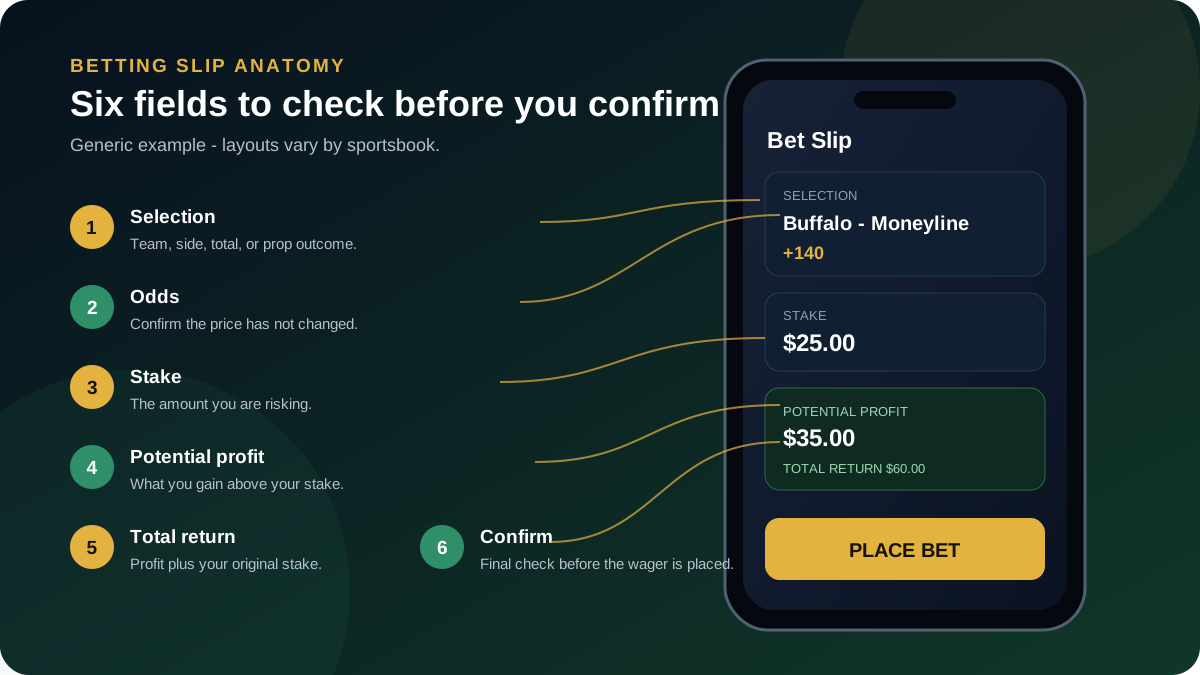
The simplest straight-bet slip has a consistent set of building blocks across almost every major sportsbook. More complex slips - parlays, teasers, live bets, and promotional wagers - build on this same basic structure.
3. READING THE SELECTION LINE
The selection line tells you precisely what outcome you are betting on. Read it carefully every time, especially on game pages with several similar markets stacked close together.
Reading the full line back to yourself before confirming is a simple habit that catches many selection errors. For a refresher on the three most common markets, see moneyline vs. spread vs. total.
4. READING THE ODDS FIELD
The odds field shows the current price attached to your selection. On US sportsbooks, American odds are usually the default. The number can change between the moment you tap a market and the moment you confirm the bet.
Most sportsbooks flag a meaningful price change and require you to accept the updated odds. Do not tap through that warning automatically. A move from +140 to +125, or from -105 to -120, changes the value of the bet even though the underlying selection has not changed.
Positive odds show the profit on a $100 stake. Negative odds show how much you would need to risk to profit $100. See the American odds guide for the full formulas.
5. READING THE STAKE FIELD
The stake field is where you enter how much money you want to risk. This is the field most worth double-checking for simple typing errors. An extra zero can turn a planned $10 bet into a $100 bet.
Many apps offer quick-select buttons such as $5, $10, $25, or $50. These can reduce typing mistakes. If your account contains both cash and promotional credit, the slip may also show a toggle or label identifying which balance is funding the wager.
Stake check before confirming
| Field | Example | Question to ask |
|---|---|---|
| Stake | $25.00 | Is this the amount I meant to risk? |
| Balance type | Cash | Am I using cash or promotional credit? |
| Available balance | $180.00 | Does this stake fit my planned betting budget? |
6. READING POTENTIAL PAYOUT, PROFIT, AND TOTAL RETURN
Potential profit and potential total return are related, but they are not the same figure.
The amount gained above your original stake.
The $35 profit plus the original $25 stake returned.
Some apps use terms such as 'to win' for profit and 'payout' for total return. Always check the label, especially when comparing slips between different sportsbooks.
| Odds | Stake | Potential profit | Total return |
|---|---|---|---|
| +140 | $25 | $35.00 | $60.00 |
| -110 | $50 | $45.45 | $95.45 |
| +200 | $20 | $40.00 | $60.00 |
7. STATUS LABELS: OPEN, WON, LOST, VOID, AND PUSH
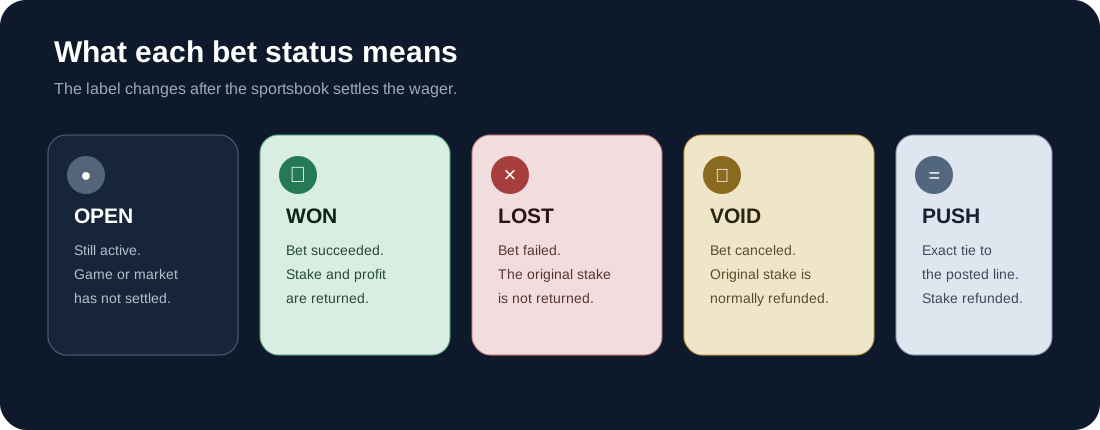
After a bet is placed, it normally moves into an Open Bets or My Bets area. The status label tells you what has happened to the wager.
| Status | Meaning | What happens to the stake? |
|---|---|---|
| OPEN | The bet is still active or awaiting official settlement. | Still committed to the wager. |
| WON | The wager settled successfully. | Stake plus applicable profit is returned. |
| LOST | The wager did not win. | Stake is not returned. |
| VOID | The sportsbook canceled the wager under its rules. | Original stake is normally refunded. |
| PUSH | A whole-number spread or total landed exactly on the line. | Original stake is normally refunded. |
8. READING A PARLAY SLIP
A parlay slip stacks every leg individually, then shows the combined parlay odds and combined potential payout. Check every leg because an old selection can remain on a slip while you continue browsing, or two intended straight bets can accidentally be combined.
Once placed, the parlay history view usually shows an overall status plus the status of each individual leg. For the math behind combined prices, see the parlays and same-game parlays guide.
9. READING A SAME-GAME PARLAY SLIP
A same-game parlay slip looks like a normal parlay, but every leg comes from one game. The combined odds can differ from a simple multiplication of standalone prices because same-game outcomes can be correlated.
Sportsbooks use correlation-aware pricing for many SGP combinations. If the displayed SGP price does not match a quick manual multiplication, that is not automatically a slip error. It may reflect how the selected outcomes influence each other.
Verify every leg, then evaluate the combined price shown on the slip. Do not assume the individual listed leg prices can always be multiplied directly.
10. READING A TEASER SLIP
A teaser slip resembles a parlay slip but should make the adjusted lines clear. A football teaser might show Chiefs -1.5 after moving the original line from -7.5 by six points.
The key check is the adjusted number. Make sure the teased line matches the amount of movement you selected. Teaser pricing is commonly based on a fixed table rather than normal parlay multiplication.
| Teaser leg | Original line | Adjusted line | What to verify |
|---|---|---|---|
| Chiefs spread | -7.5 | -1.5 | Six points were added in your favor. |
| Game total | 47.5 | 53.5 Under | The total moved six points in the direction selected. |
For more detail, see Teasers explained.
11. READING A LIVE BET SLIP
A live bet slip contains the same core fields as a pregame slip - selection, odds, stake, and potential payout - but the game state is changing while you are looking at it. Many sportsbooks also show the current score, clock, inning, or period.
Live prices can move quickly. A slip may briefly lock, refresh, or ask you to accept new odds before the bet is confirmed. Re-read the price after any update rather than assuming the number you first selected is still available.
If the odds refresh, treat the updated slip as a new decision. Confirm the selection, current game state, and new price before placing it.
See the live and in-play betting guide for more on moving prices and in-game markets.
12. READING A BET SLIP THAT INCLUDES A BONUS BET
When a bet uses promotional credit, the slip usually labels the stake as a bonus bet or gives you a balance selector. The payout rules can differ from a normal cash-funded wager.
A common bonus-bet structure returns only the profit as withdrawable cash after a win; the promotional stake itself is not returned. That means a $25 bonus bet at +140 may produce $35 in withdrawable profit rather than a $60 cash-style total return.
| Funding type | Stake | Odds | Typical winning result |
|---|---|---|---|
| Cash | $25 | +140 | $35 profit + $25 stake returned = $60 total |
| Bonus bet | $25 promo | +140 | Often $35 withdrawable profit; promo stake not returned |
Promotional rules vary, so the exact wording on the slip and the operator's terms control the outcome.
13. READING YOUR BET HISTORY AFTER A BET SETTLES
After settlement, the wager usually moves from Open Bets to Bet History or Settled Bets. The record should preserve the key details from the original slip: selection, odds, stake, result, and amount returned or lost.
Reviewing bet history is useful for more than record keeping. It gives you a concrete way to see which bet types you use most often, whether you repeatedly make the same mistakes, and whether your actual results match your memory of them.
Useful history fields to review
- Date and event
- Selection and market type
- Odds at placement
- Stake amount
- Final status
- Profit or loss
14. DESKTOP VS. MOBILE SLIP LAYOUTS
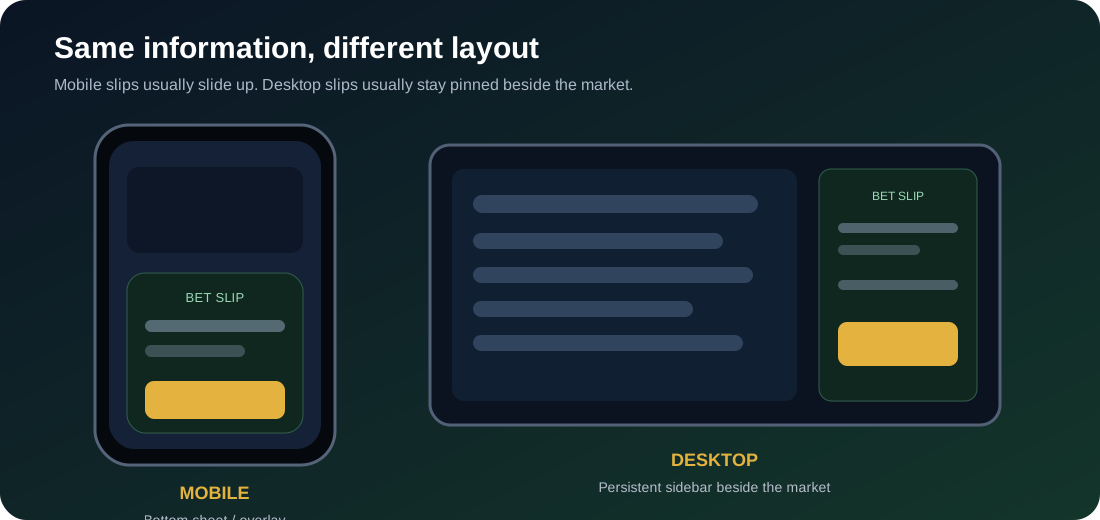
On mobile, the slip commonly appears as a panel that slides up from the bottom of the screen after you tap a selection. On desktop, the slip is often a persistent sidebar beside the market you are browsing.
The visual layout changes, but the information is the same: selection, odds, stake, payout, balance type, and confirmation. Desktop can be easier for larger parlays because you can see more selections and the full slip at the same time.
| Layout | Typical behavior | Best habit |
|---|---|---|
| Mobile | Slip opens as a bottom sheet or overlay. | Scroll through every selection before confirming. |
| Desktop | Slip remains visible in a side column. | Check that old selections have not remained on the slip. |
15. WORKED EXAMPLES, START TO FINISH
Straight moneyline slip
You are betting Buffalo to win outright, risking $25 to profit $35 if the selection wins.
Spread slip
Kansas City must win by more than 3.5 points for the bet to cover.
Three-leg parlay slip
All three legs must win for the parlay to pay.
Bonus bet slip
Under a typical stake-not-returned bonus structure, the $35 profit becomes cash while the $25 promotional stake is not returned.
Teaser slip
Both legs use adjusted numbers, so the most important slip check is confirming each teased line is exactly what you intended.
16. COMMON BET SLIP READING MISTAKES
Not reading the full selection
Similar-looking markets can lead to the wrong side, player, or threshold being added to the slip.
Ignoring an odds-change alert
The selection may be unchanged while the price has become meaningfully worse.
Confusing profit with total return
Total return includes your original cash stake. Profit is the amount gained above it.
Missing the balance type
A bonus-bet-funded wager can settle differently from the same selection funded with cash.
Creating an unintended parlay
Adding a second selection can combine bets when you meant to place two separate straight wagers.
Never reviewing bet history
Without reviewing settled slips, repeated selection, sizing, or market mistakes are harder to spot.
17. FREQUENTLY ASKED QUESTIONS
18. QUICK-REFERENCE GLOSSARY
Read first, confirm second
Interface labels and examples in this guide are illustrative. Always review the exact selection, price, stake, balance type, and operator rules before confirming a wager.